
 DUAL Group
 Austria
 Finland
 France
 Germany
 Ireland
 Italy
Italy
 Netherlands
 Spain
Spain
 Sweden
 Switzerland
 United Kingdom
 Europe
 Australia
 Hong Kong
 New Zealand
 Singapore
 USA
USA
Underwriting Perspectives: Kaycie Cook, President, DUAL Builders Risk on discipline, disruption, and direction in a fluctuating market
 Prefer us on Google


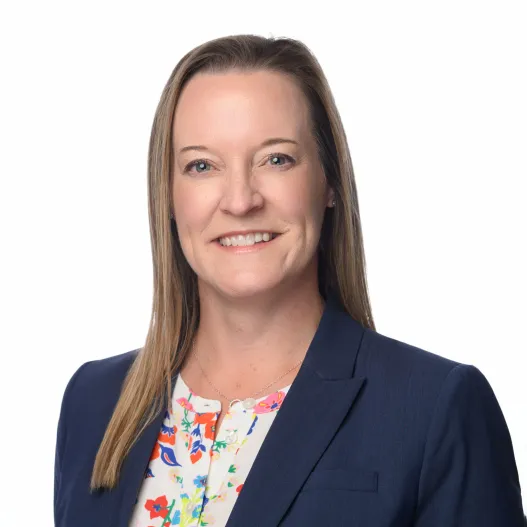
Our role is to stay ahead of market conditions that would seek to prevent us from running our business, but we also cannot ignore what the cycle is telling us over time.
Kaycie Cook, President of DUAL Builders Risk, joins us for the latest Underwriting Perspectives to share insights into how the market is evolving and how DUAL is providing comprehensive solutions to today’s builders risk exposures. Below, Kaycie provides key perspectives on factors influencing market softness and the overall environment of this niche industry sector.
Q: Kaycie, can you share some background about your program, including how your team approaches risk, and how your coverage is structured?
A: DUAL Builders Risk crafts tailored policies for hard-to-place business, particularly for new construction projects, covering buildings, structures, materials, and additional related expenses. As founder and builder of the program, my role involves growing the team and the business, and collaborating within DUAL to support our partners. DUAL Builders Risk is six years old and counting, currently working in partnership with five capacity partners. The team includes team leads, underwriters, and associate underwriters who handle business from across the US. Each person on the team has a wealth of experience related to builders risk underwriting that enhances our results in a niche and complex environment.
We have a nationwide geographic footprint, except for a few states, and primarily focus our book on wood frame residential projects like single family homes, student housing, assisted living, and more. That said, in 2024, we expanded the program to offer 100% solutions for projects under $30 million, a key competitive threshold in our market. In this economically driven, project-based sector, our experience and innovation set us apart. As we grow our presence across shorter-term civil and energy projects, we’re evolving our coverage structures, adding to the team, and tweaking our distribution strategy, all to ensure our product is accessible, reliable, and exceptional.
Q: Can you provide context around the factors that are shaping the market right now?
A: Similar to many industries, our market is changing drastically (and rapidly) in response to a variety of factors. First is that the wood frame market is softening after ten years of a hard market cycle. As other building material types, like concrete and steel, became more expensive in that period, a lot of construction moved to wood frame. Second, following the pandemic, with supply chain challenges, rates increased and brought new players into the space trying to capitalize on the hard market conditions, naturally shifting the market again. However, the third factor of large losses typically due to arson which started the hard market a decade ago and have continued even as rates have decreased over the past two years. The term “not in my backyard” (NIMBY) refers to the sentiment around motivations for arson-related construction losses, which have caused loss ratios to skyrocket across the industry and continue to wreak havoc on wood frame portfolios regardless of size. A single loss can wipe out a significant amount, if not all, profit in almost any portfolio.
Overarchingly, the hard market conditions over the past ten years initially caused capacity reductions for many carriers, either drastically reducing their limits or withdrawing from the market altogether. Fast forward 10 years, rates have become compressed in the current softening market, but loss ratios have not dropped in tandem, meaning that businesses are now seeing challenges on the premium side where the math no longer works in their favor. Having a team like DUAL’s, which is comprised of decades worth of builders risk experience, means that we have a strong understanding of market history and loss ratio changes, depth that newer entrants and younger underwriters have not yet developed. We’ve had to be a lot more nimble than in past years but have been able to lean on strong underwriting standards like site security and risk screening, that others are ignoring or finding shortcuts for in order to meet their goals.
Q: What are the factors that underscore “underwriting discipline” in your program?
A: We do not budge when it comes to our program’s underwriting standards. This team makes a promise to carriers to underwrite with diligence, integrity, and deep expertise. Regardless of competitive pressures or competitor standards, underwriting discipline means upholding those standards. Our core underwriting checklist includes things like contractor vetting, natural disaster risk scoring, proximity to emergency services, crime exposure analysis, and more to ensure we are diligent and consistent in our underwriting.
The DUAL Builders Risk team has a deep understanding of this niche market and how these relevant exposures drive loss ratios. As mentioned previously, through learned experience, we know that arson remains a key risk related to construction projects regardless of site security provided. When we look at multifamily housing projects that could change the makeup or traffic patterns of a community, a key function of our process is understanding community sentiment around the construction plans, as aggressive opposition to these projects is a key arson indicator. These are risk factors that cannot be identified by just a risk score. Further, we implement on-site requirements such as site security to limit risk exposure, informed by area crime profiles. Losses can also come from attritional exposures, like water damage driven by inexperienced contractors or lack of qualified subcontractors in an area, so our role is to understand the entire scope and location of a project as part of our overall underwriting. This discipline and proactive attitude keep us both restrained and profitable.
Q: How does being part of a program administrator impact your ability to evolve and collaborate?
A: DUAL is an underwriting first organization, so there’s a culture around diligence but also a push for autonomy and agility. As a program administrator, our reputation as specialty underwriters is everything. We have a duty to uphold exceptional standards of underwriting, not only because our business depends on it and it’s the right thing to do, but because it’s what we’re best at. Collaboration is another key function of being a program administrator, meaning we lean on other leaders throughout the other DUAL divisions for guidance on how they manage softening market cycles in their own lines of business. This collaboration also enhances carrier stickiness, as shared relationships throughout our programs, combined with excellent results, lead to deeper partnerships.
Mentorship is an important part of leadership at DUAL. There’s an underlying ethos surrounding evolution and innovation. Leadership at DUAL encourages the entrepreneurial spirit but provides support with major decisions like capacity changes or marketing and distribution guidance. Alongside this type of leadership and the overall program administrator model, we have the ability to pivot, dynamically adjusting to market conditions as needed, which would be harder to do in a traditional structure. It also helps advance our people a bit more quickly. For example, my trajectory involved founding the program and developing our underwriting standards to now extending that personal development to my underwriters to manage the underwriting cycle and expand their technical underwriting skills as we diversify our underwriting portfolio.
Q: So, what’s next in the builders risk market and how are you actively adapting to emerging risks?
A: There’s a lot going on in our market, but a few key emerging trends we’re watching include:
- New entrants – Following strong results in the past few years, a wave of new entrants started writing builders risk insurance. While they may have capacity, DUAL has relationships that will drive longevity, where newer players will struggle a bit more to grow pipelines, compete for partnerships, and build consistency. We have been battle-tested and have continued to grow even when capacity is scarce.
- AI's evolving role – As AI becomes a more natural part of how people work, insurers are looking to enhance speed to market and underwriting depth where historically there has been a trade-off between the two. Reducing manual tasks without compromising non-negotiable standards of underwriting and human expertise reduces cycle times and preserves integrity.
- Retail expansion – Retail agencies are becoming key partnerships for businesses that want to grow in this market, a meaningful shift from the infrastructure of the past. We intend to expand our own relationships and grow this arm of business strategically over the next couple of years, by developing our expertise and writing classes that won’t make it to the wholesale market such as technical or engineered risks. While we anticipate this will take some time, these relationships are critical.
- Underwriting integrity – The market has competitive pressures for many to move fast and bend to the will of broker requests, but that speed and naivety can negatively impact disciplined underwriting. As a program administrator, DUAL retains that diligence throughout all accounts because we have a promise to our partners that we will do things the right way for each and every account regardless of marketplace pressures.
- Loss ratio management – As losses for accounts bound at lower rates in 2025 and 2026 start to mount over the next year, many carriers, especially new markets and MGAs that have entered the space then, will begin to see unfavorable balance sheets and capacity exiting. DUAL’s long term carrier relationships and dedication to doing the right thing for them will serve us well through this upcoming market cycle.
DUAL Builders Risk is your one-stop shop for getting the tailored coverage you need. Our team of experienced and technical underwriters provides coverage for hard-to-place wood frame, energy, civil infrastructure, renovation and natural catastrophe named peril policies.
For more information about our DUAL Builders Risk program, you can reach Kaycie at [email protected] or visit our Builders Risk page.
Contact the expert
This marketing material is for informational purposes only and does not constitute an offer or solicitation of insurance or legal or other advice. Coverage availability and eligibility may vary by state and are subject to regulatory approval.
More perspectives from our leaders

Never miss an update.
Sign up for our mailing list.